Tremor, stiffness, slowed movement and balance changes can have several possible causes. A neurological examination and medical history remain central to evaluating these symptoms, but a physician may recommend DaTscan imaging when the clinical picture is unclear.
DaTscan is a specialized nuclear medicine study that evaluates dopamine transporter activity in the brain. It may help physicians distinguish a parkinsonian syndrome from a condition such as essential tremor, but it does not diagnose Parkinson’s disease on its own.
Understanding what the scan can and cannot show can make the referral and imaging process easier to navigate.
What Is a DaTscan
DaTscan is the brand name for a radiopharmaceutical used with single-photon emission computed tomography, or SPECT. Before imaging, the patient receives a small amount of radioactive tracer. After a waiting period that allows the tracer to circulate, a gamma camera creates images of dopamine transporter activity in an area of the brain involved in movement.
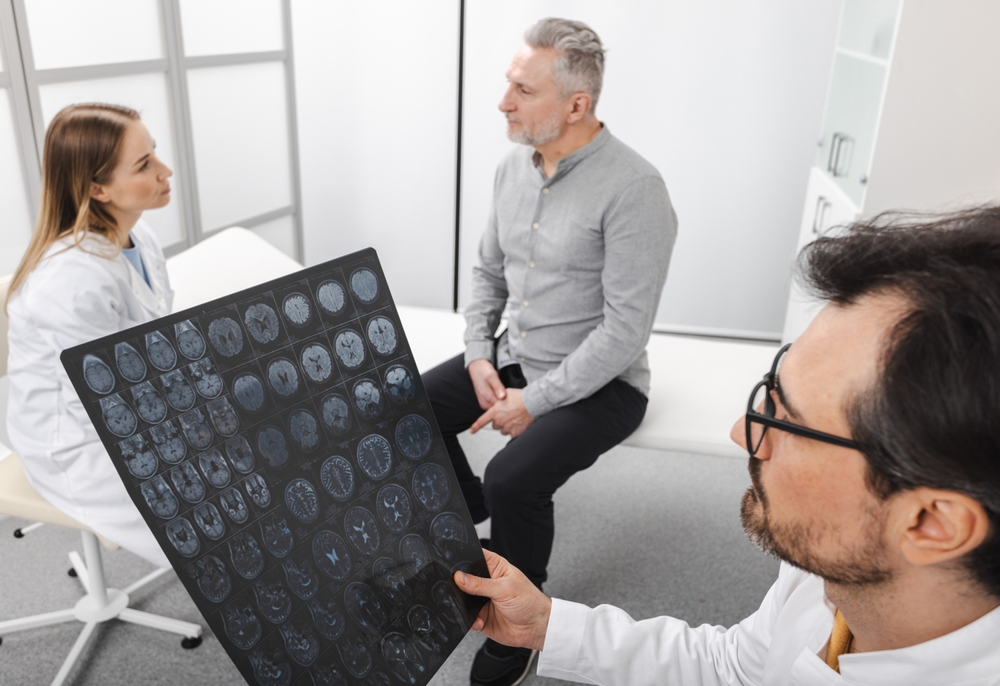
Unlike MRI, which is commonly used to evaluate anatomy and structural abnormalities, DaTscan provides functional information about the brain’s dopamine system. The scan does not image a tremor directly and does not measure how severe a person’s symptoms are.
How DaTscan May Help Evaluate Parkinsons Symptoms
Parkinson’s disease is generally diagnosed clinically based on symptoms, medical history and neurological examination. When the findings are not clear, DaTscan may add information by showing whether dopamine transporter activity is reduced.
Reduced activity can support the presence of a neurodegenerative parkinsonian syndrome. A result without that pattern may lead the treating physician to consider another explanation for the symptoms. Imaging findings are only one part of the evaluation and must be interpreted by the neurologist or referring physician in the context of the complete clinical picture.
DaTscan for Tremors and Essential Tremor
Tremors do not all have the same cause. Parkinsonian tremor is often more noticeable at rest, while essential tremor commonly appears during movement or while holding a position. These patterns can overlap, however, and some patients have symptoms that do not fit neatly into one category.
When the distinction remains uncertain after a clinical evaluation, DaTscan may help differentiate a parkinsonian syndrome from essential tremor. Parkinsonian syndromes generally produce reduced dopamine transporter activity, while essential tremor typically does not produce the same imaging pattern.
DaTscan cannot identify the cause of every tremor. Medication effects, metabolic conditions and other movement disorders may require different testing or clinical evaluation.
Can DaTscan Confirm Parkinsons Disease
No. An abnormal DaTscan is not specific to Parkinson’s disease. Other degenerative parkinsonian disorders can also reduce dopamine transporter activity, so the scan generally cannot distinguish Parkinson’s disease from every related syndrome.
A normal or abnormal result should not be interpreted in isolation. The most useful question is whether the finding helps the treating physician clarify the diagnosis or choose the next step in care.
When Might a Physician Recommend DaTscan
A physician may consider DaTscan when:
- Tremor or other movement symptoms have more than one plausible cause.
- The examination does not clearly distinguish a parkinsonian syndrome from essential tremor.
- Additional evidence about dopamine transporter activity could affect diagnostic planning.
- Symptoms or treatment response are atypical and the physician wants supporting information.
Not every patient with tremor or possible Parkinson’s symptoms needs this study. The referring physician determines whether the expected information justifies the scan for the individual patient.
How to Prepare for a DaTscan
Preparation instructions can vary, so follow the directions from the referring physician and imaging center. Before the appointment, provide a complete list of prescription medications, over-the-counter products and supplements.
Some medicines can interfere with dopamine transporter imaging, but patients should not stop a medication unless a qualified member of the care team specifically instructs them to do so.
Tell the imaging team about allergies, recent illnesses and relevant medical conditions. Patients who are pregnant, may be pregnant or are breastfeeding should notify both the referring physician and imaging facility before the examination.
What to Expect During DaTscan Imaging
The appointment typically includes preparation, administration of the radiotracer, a waiting period and SPECT imaging. The imaging team may also provide another medication as part of the exam protocol. During the scan, the patient lies on the imaging table and remains as still as possible while the camera acquires images around the head.
The total visit is longer than the camera time alone because the tracer needs time to distribute before imaging begins. ADR will provide study-specific instructions, including arrival time and preparation requirements, when the examination is scheduled.
Schedule DaTscan Nuclear Medicine Imaging With ADR
Advanced Diagnostic Radiology provides nuclear medicine imaging at 952 Seton Drive, Suite 210, in Cumberland, Maryland, serving patients from Western Maryland and nearby communities in Pennsylvania and West Virginia.
If a physician has recommended DaTscan imaging, contact ADR to confirm availability, referral requirements and preparation instructions for the ordered study.
Call Advanced Diagnostic Radiology at 301-777-3522 or request an appointment online. Your referring physician can explain why the scan was ordered and how the results fit into your overall evaluation.